
TL;DR About OfEngine vs Fanso’s OnlyFans Clone
- Fanso offers a self-hosted, white-label OnlyFans-style platform starting at $699, with core monetization features, optional add-ons, and different source-code options across its license packages.
- OfEngine has plans ranging from $300 to $3,000, with custom Enterprise pricing. Pro ($1,500) adds advanced subscription options, promotions, and messaging; Business ($3,000) includes CRM, AI Compose, and creator team management; enterprise plan adds agency tools, cross-creator analytics, automated workflows, and advanced AI.
- Fanso uses a Node.js, NestJS, React, Next.js, TypeScript, and MongoDB stack, while OfEngine uses Laravel, PHP, React, Tailwind CSS, and MySQL, making the technology stack another factor to consider.
- Both platforms support self-hosted deployment and customization, but the better fit depends on the required features, source-code access, payment setup, hosting requirements, and future platform needs.
Ready-made OnlyFans Clone scripts such as Fanso and OfEngine provide the core software needed to run a subscription-based creator platform, including paid content, fan interactions, creator management, and monetization.
Fanso provides a self-hosted, white-label platform with core creator monetization features and optional add-ons, while OfEngine uses tiered licenses that add more advanced creator tools, CRM, AI, and agency functionality at different packages.
This comparison looks at OfEngine vs Fanso across their features, pricing, monetization tools, AI and automation, administration, payments, customization, deployment, and support. It also considers available product documentation so businesses can compare platforms based on the functionality they actually need, not just the starting license price.
Overview of OfEngine vs Fanso’s OnlyFans Clone
Fanso and OfEngine both target businesses that want to launch an OnlyFans-style creator platform without developing the core system from scratch. The main difference is how each product packages its features, licensing, source-code access, and higher-level functionality.
| Comparison point | Fanso | OfEngine |
| Product model | White-label creator platform | White-label creator-platform |
| Deployment | Self-hosted | Self-hosted |
| Pricing model | One-time license with optional add-ons | One-time license based on selected plan |
| Customization | Branding and configuration, with source-code access depending on the package | Source-code modifications and paid development for additional requirements |
| Best suited to | Businesses looking for a ready-made white-label foundation | Best for businesses that need progressively advanced platform features, AI automation, CRM, and operational tools |
The comparison becomes more relevant when looking beyond the starting price. Fanso uses two main license packages with additional modules available separately, while OfEngine increases the available functionality through higher license tiers. Source-code access also differs between their packages, which can affect how much control a business has over future customization.
OfEngine vs Fanso’s OnlyFans Clone Feature Comparison
The feature sets of Fanso and OfEngine cover many of the core capabilities needed to build an OnlyFans-style platform, including subscriptions, PPV content, paid messaging, tips, livestreaming, creator payouts, fan engagement, content management, and administration. The main differences appear in how each platform handles monetization, AI and automation, creator and fan management, payments, and higher-level operational features.
The comparison below looks at these features from the perspective of a business planning to build an OnlyFans-style platform.
1. Monetization Options
| Winner: Fanso for core monetization at a lower license price. Its $699 Starter plan covers subscriptions, PPV content, tips, paid livestreams, ad placements, and a creator store. OfEngine is worth considering for businesses that need advanced subscription options, bundles, trials, discount codes, and promotional campaigns in its Pro plan. |
A creator platform needs several ways to generate revenue because subscriptions alone may not suit every creator or audience. PPV content, tips, livestreams, messaging, and product sales can each support a different part of the revenue model.
Fanso’s core monetization for an OnlyFans clone includes subscriptions, PPV content, tips, paid livestreams, ad placements, and a creator store, with commissions tracked across these revenue sources. Pay-per-message and mass messaging can be added separately.
OfEngine builds a broader pricing and promotion layer around subscriptions, PPV posts and messages, tips, livestreams, virtual gifts, and digital products. Basic features such as subscription tiers, bundles, trials, discount codes, promotional campaigns, and Pay Links are available only in the Pro package.
For a business starting with several established revenue streams, Fanso covers the main requirements without making the monetization structure overly complex. OfEngine becomes more relevant when the platform needs different subscription packages, promotional offers, or more detailed ways to sell creator content.
2. Fan Engagement Tools
| Winner: OfEngine for structured fan management. Its Pro plan ($1,500) includes advanced messaging features, while the Business plan ($3,000) adds fan tags, notes, and audience segmentation. These tools help businesses organize fan relationships and target specific audience groups as their creator base grows. |
Direct messaging and social interaction help creators maintain engagement between paid content and live sessions.
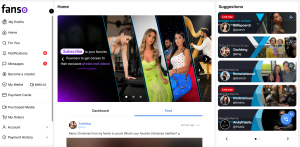
Fanso’s user experience covers creator discovery, social feeds, reactions, comments, bookmarks, recommendations, notifications, and direct communication. OfEngine places more emphasis on structured fan management through PPV messages, mass and scheduled messaging, voice notes, fan tags, notes, and audience segmentation.
This distinction matters as the creator base grows. A community-focused platform can rely on discovery and social interaction to keep fans engaged, while businesses with larger creator operations may need more structured tools for targeting and organizing different audience groups.
3. Content Management
| Winner: Fanso for creator publishing and storefront management. Its $699 Starter plan covers multiple content formats, scheduled posts, polls, PPV content, livestreaming, and creator-store products. This gives businesses a broad set of publishing and content-selling tools without requiring the Professional license. |
Content management affects how creators publish media, control access, and connect free content with paid experiences. The workflow needs to accommodate different media formats while keeping publishing, monetization, and livestreaming manageable from the creator side.
Fanso brings image, video, audio, and text publishing together with polls, scheduled content, PPV posts, livestreaming, and creator-store products. OfEngine combines posts and stories with PPV messaging, livestreaming, digital products, and its wider messaging and promotional workflows.
For businesses, the choice comes down to how closely content needs to connect with the rest of the platform. Fanso puts more emphasis on a complete creator publishing and storefront workflow, while OfEngine connects content more closely with communication and promotional management.
4. AI and Automation
| No outright winner: the better choice depends on the required AI features. Fanso offers selected AI capabilities as paid add-ons, while OfEngine includes a broader range of AI tools in its higher plans, including AI Compose, auto-replies, smart PPV pricing, moderation, and natural-language analytics. Businesses should compare the specific tools they need and their total cost before choosing. |
AI can reduce manual work in creator communication and help businesses automate parts of pricing, recommendations, moderation, and audience management. The level of AI integration can therefore affect both the product experience and ongoing operational workload.
Fanso uses an add-on approach for capabilities such as AI voice replies, message drafting, creator-persona chatbots, content recommendations, pricing suggestions, and face transformation. OfEngine places a broader set of AI tools within its higher plans, including AI auto-reply, AI Compose for messages and posts, smart PPV pricing, fan segmentation, content moderation, and natural-language analytics.
This makes Fanso more suitable for businesses that want to select specific AI capabilities as the platform develops. OfEngine is positioned more toward businesses that want AI to become part of communication, pricing, moderation, and analytics across the platform.
5. Platform Administration
| Winner: OfEngine for multi-creator and agency operations. Its higher plans add built-in CRM tools, team and agency management, revenue splits, unified messaging, and cross-creator analytics. Fanso already covers core administration, including commissions, payouts, moderation, refunds, and revenue reporting, but OfEngine has the advantage for businesses managing larger teams or multiple creator accounts. |
The admin layer determines how much of the day-to-day business operation can be handled from one place. Beyond managing users and creators, businesses may need controls for commissions, payouts, moderation, discounts, refunds, disputes, and revenue reporting.
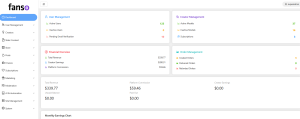
Fanso’s administration tools cover platform settings, payment configuration, commission rules, revenue analytics, creator payouts, moderation workflows, discount campaigns, creator categories, refunds, disputes, and chargebacks. OfEngine extends its operational layer with staff permissions, built-in CRM tools such as tags, notes, and segments, advanced analytics, team management on creator accounts, agency management, revenue splits, unified messaging, and cross-creator analytics on higher plans.
For a standard creator marketplace, Fanso covers the main operational controls. Businesses managing internal teams, agencies, or multiple creator accounts may get more value from OfEngine’s additional organizational tools.
6. Payments and Payouts
| Winner: Fanso for core payment and payout workflows. Its platform supports payment integrations, wallet and crypto options, earnings tracking, payout requests, and commission management. OfEngine is a strong alternative for businesses that specifically need advanced payment routing and per-creator payout controls in higher plan |
Payment functionality affects both the fan checkout experience and the way creator earnings move through the platform. The setup also needs to account for refunds, chargebacks, commissions, and payout tracking.
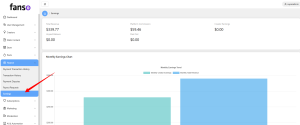
Fanso has integrated payment gateways for creator platforms such as CCBill, Verotel, and Stripe for eligible creator platforms, along with wallet payments, crypto payment integrations, payment history, earnings tracking, payout requests, and commission management. OfEngine supports multiple payment interactions, including Stripe Checkout, PayPal, CCBill, and NetBilling, while higher plans add advanced payment routing and per-creator payout controls.
The number of gateways is not the only factor to consider. Payment-provider eligibility can depend on the business model, content type, location, and processor policies, so businesses should confirm approval and commercial terms before choosing the final payment setup.
OfEngine vs Fanso OnlyFans Clone Pricing
Pricing is one of the clearest differences between Fanso and OfEngine, but the license price alone does not show the full cost of launching and operating the platform. Source-code access, included features, add-ons, updates, and support also affect the overall budget.
| Winner: Fanso for included feature value; OfEngine for the lowest entry price. Fanso Starter costs $699 and includes a broad set of core platform features. OfEngine starts at $300, but businesses needing full source-code access must consider its $1,500 Pro plan. Fanso Professional costs $1,499 and includes unencrypted source code and API documentation. |
1. Fanso Pricing
Fanso’s OnlyFans clone prices start at $699 for Starter and $1,499 for Professional, both sold as one-time licenses. However, the one-time license does not mean that updates and support are included indefinitely. Starter includes free updates and support for 6 months, while Professional includes them for 12 months.
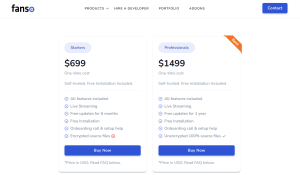
The two packages also differ in source-code access. Starter includes the source code in encrypted form, which limits direct editing. Professional includes 100% unencrypted, source code along with API documentation, making it the more suitable option when a business expects to make bigger changes to the platform.
Additional functionality can also increase the final budget. Features available as paid add-ons, such as advanced AI capabilities, additional messaging functions, language support, or specific payment requirements, must be considered separately from the base license.
2. OfEngine Pricing
OfEngine uses a tiered license structure. The Regular plan costs $300 and provides the core platform with a compiled React frontend. Businesses that need fully Laravel and React source code move to the Pro plan at $1,500.
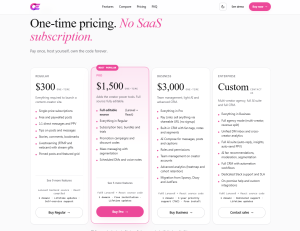
The Pro plan adds features such as subscription tiers, bundles, trials, discount codes, promotional campaigns, mass and scheduled messaging, advanced analytics, CCBill REST integration, and per-creator payout routing.
The Business plan costs $3,000 and adds team management for creator accounts, built-in CRM tools such as tags, notes and segments, AI Compose for messages and posts and Pay Links for anonymous checkout. Businesses requiring agency functionality, cross-creator analytics, automated workflows, advanced AI, custom integrations, and a full source code can move to the Enterprise plan with custom pricing.
Which Pricing Model Fits Better?
Fanso’s OnlyFans clone has a higher starting price to build an OnlyFans-like platform, but its two main packages make it easier to choose between a lower-cost entry point and a package with full source code. Businesses should also consider the cost of optional add-ons and updates and support after the included period when calculating the long-term budget.
OfEngine OnlyFans clone starts at a lower license price, but businesses may need to move to Pro or Business as their requirements become more advanced. The better option therefore depends on whether the priority is a ready-made white-label foundation or access to progressively broader creator, CRM, AI, and operational features through higher license tiers.
Customization, Hosting and Source Code
| Winner: Tie, with Fanso offering an installation advantage. Both platforms support self-hosted deployment and customization. Fanso Professional ($1,499) includes unencrypted source code and API documentation, while OfEngine Pro ($1,500) provides full Laravel and React source code. Fanso also includes installation, making it a practical option for businesses that want setup assistance. |
The initial license price is only part of the decision. Source-code access, hosting requirements, installation, and customization determine how much control a business has after purchasing the platform.
Technology, Hosting and Source-Code Ownership
Both Fanso and OfEngine use self-hosted setups, so the business manages the hosting environment and deployment rather than relying on a vendor-hosted SaaS model.
| Area | Fanso | OfEngine |
| Frontend | React, Next.js, TypeScript, Redux, Redux-Saga | React 18, Tailwind CSS |
| Backend | Node.js, NestJS, ts-node | Laravel 11, PHP 8.2 |
| Database | MongoDB | MySQL 8 |
| Platform model | Self-hosted white-label platform | Self-hosted platform |
| Source code | Starter uses encrypted code; Professional includes 100% unencrypted, source code | Fully Laravel and React source code starts with Pro |
| Customization | Supported | Supported |
Source-code access can make a significant difference when the platform needs to be modified later. Fanso’s Professional package includes full source code access and API documentation, while OfEngine provides fully Laravel and React source from the Pro plan. The selected license therefore affects both the initial investment and the amount of development work possible after launch.
Support, Installation and Customization
Fanso includes installation as part of its setup process, with the platform configured on the business’s server before launch. The setup can include domain, SMTP, social login, payment, and other platform configurations.
OfEngine’s installation and support terms depend on the selected license. Businesses should confirm what is included with their chosen plan before purchase, particularly when custom integrations or additional development are required.
Both platforms can be extended beyond their standard configurations, but custom development can increase the overall budget. Businesses should therefore confirm source-code access, installation scope, support terms, customization costs, and third-party service requirements before choosing a platform.
Final Thoughts
Rather than choosing based on the number of features alone, businesses should consider how well the platform fits their current requirements and future plans. OfEngine has an advantage for businesses that need advanced CRM, AI, analytics, team management, or agency features through higher-tier plans. Fanso is the stronger choice for businesses looking for a ready-made, self-hosted, white-label OnlyFans-style platform with core monetization features, source-code options, and the flexibility to add functionality as needed.
For businesses that want to launch an OnlyFans-style creator platform without building the core system from scratch, Fanso’s OnlyFans clone provides a practical starting point with the features and customization options needed to build and grow the platform.
FAQs About OfEngine vs Fanso
1. Does a one-time license cover all the costs of running the platform?
No. The license covers the platform itself, but businesses still need to budget for hosting, payment processing, AI services, media storage and generation, maintenance, and any paid add-ons or custom development.
2. Can an existing creator platform be migrated to OfEngine or Fanso?
Migration depends on the existing platform, its database structure, content, user accounts, payment setup, and the migration tools available. Neither platform should be assumed to support a complete automatic migration. Businesses should discuss the existing system and required data migration with the respective development or support team before switching.
3. Which is better for building an OnlyFans-style platform, OfEngine or Fanso?
There is no single option that fits every business. Fanso is better suited to businesses looking for a ready-made white-label foundation with core monetization features and optional add-ons. OfEngine can be a better fit for businesses that need progressively advanced CRM, AI, analytics, team management, or agency features through higher license tiers.