Key Takeaways:
- A creator marketplace is a digital platform that connects content creators with fans or brands.
- Creators choose marketplaces for global audience access, multiple income streams, and solid platform infrastructure.
- Fitness, fashion, entertainment, gaming, and AI-powered platforms are emerging niches for creator marketplaces.
- Marketplaces can monetize from commissions, subscriptions, ads, featured listings, and a freemium model.
Building a creator marketplace is a resounding business idea and your ticket to the massive $250 billion creator economy.
Well, if you aren’t still convinced, then even MrBeast is building a global creator marketplace connecting creators with brands. Yes, the top YouTuber envisions making the creator economy accessible to Fortune 1,000 companies with his big project.
So, whether you’re building a niche community, subscription-based marketplace, or a sports pay-per-view website, you have made the right decision! But, how do you build your creator marketplace from the ground up? Let’s explore the detailed steps, market trends, examples, and the right development approach to cut down your cost and time-to-market!
Table of Contents
- 1 What is a Creator Marketplace? Why Creators Choose Marketplaces?
- 2 How to Build a Creator Marketplace?
- 3 Key Creator Economy Trends to Scale Your Marketplace in 2026
- 4 Successful Creator Marketplaces in 2026
- 5 Conclusion: Ready to Launch Your Creator Marketplace?
- 6 FAQ-Related to How to Build a Creator Marketplace
What is a Creator Marketplace? Why Creators Choose Marketplaces?
A creator marketplace is an online platform connecting content creators with brands or fans who want to access exclusive content or services. These creators are either artists, influencers, educators, streamers, adult creators, or coaches.
The marketplace offers creators with hosting, payment management, and promotional tools to expand their reach. On the other hand, fans enjoy direct creator interactions and personalized content experiences. While the marketplace monetizes from platform fees, commissions, or sponsorships, building niche authority.
Why Creators Choose Marketplaces?
The right content marketplace enables creative connections, collaborations, and revenue growth.
Marketplaces are a powerful growth engine for creators because:
- Access to a global audience
- Faster monetization
- Revenue diversification
- Provides hosting infrastructure, secure payments, and moderation tools
- Platform tools and analytics
- Focus on content creation and growth rather than infrastructure.
- Content ownership & pricing control
How to Build a Creator Marketplace?
Here’s a step-by-step guide to developing a creator marketplace:
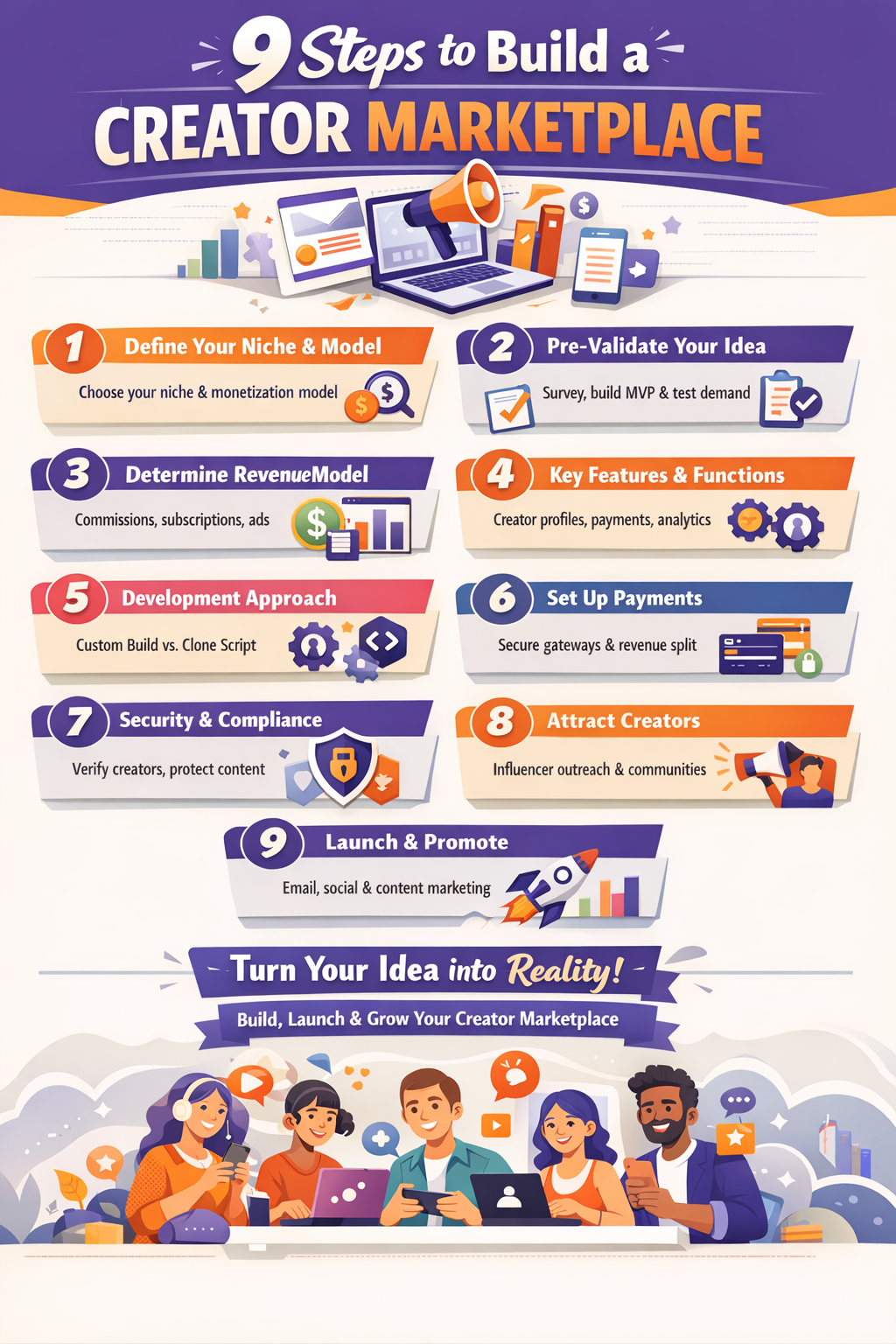
Step 1: Define Your Niche and Marketplace Model
Every creator marketplace starts with a niche and a business idea. High-demand niches are fitness, fashion, entertainment, gaming, AI creators and virtual influencers. You can either focus on a single niche or blend aspects from multiple niches.
Different types of creator economy niches:
- Topic-Based Niches: Micro-niches or hybrid niches, such as sustainable fashion, esports, or plant-based nutrition.
- Format-Based Niches: Focus on specific content formats, such as short-form video, PPV, livestreams, podcasting, or newsletters.
- Audience-Defined Niches: Target specific demographic groups, such as Gen Z, busy professionals, regional audiences, or new parents.
To pick the right niche, ensure your platform solves a market problem, analyze competitors and validate demand.
Next, it’s time to determine how creators will earn on your platform. That’s what marketplace models are about.
Popular creator marketplace models are:
- Subscription-based marketplaces: These platforms monetize from monthly or annual subscription plans offering exclusive content access.
- Service-based marketplace: These platforms connect creators with brands or offer personalized services. Different services include pay-per-minute video calls or consultations, custom content, shoutouts, etc.
- Pay-per-view marketplaces: Pay-per-view websites lock premium content or live events behind a paywall, which fans can access for a fee.
- Content licensing marketplaces: Users pay a licensing fee for using creator content for their own content or advertising.
Step 2: Pre-Validate Your Marketplace Idea
Building a marketplace isn’t a one-off exercise, and there’s no golden rulebook. It’s more of a process loop of ideation, iteration, and validation. Most entrepreneurs spend months brainstorming the right idea and development process, but don’t check if there’s market demand for it.
Ask these key questions to validate your idea at each business stage:
- Does your target audience actually experience this problem? (Tools: Industry publications, keyword research, surveys)
- Are people willing to pay for your solution? (Build MVP model with core user journeys and user funnels)
- Is your business model viable enough? (Test usability, revenue model, and business model)
- What are strategies for ensuring business success? (Evaluate key business metrics like response time, server uptime, engagement, etc.)
Step 3: Determine Your Revenue Model
The marketplace revenue model is based on generating money from buyers and sellers with different transactions. Platform commissions are the primary revenue stream for most creator platforms. Many diversify their revenue with multiple income streams, from subscriptions to advertising.
Common revenue models include:
- Commission-based Model – One of the most significant revenue models that takes a fixed sales fee from platform transactions.
- Subscription-based Model – Earn through recurring fees (monthly, yearly, or quarterly) for access to exclusive content.
- Featured Listing Fees – Creators pay for visibility in the top search results or to appear as suggestions in the marketplace.
- Freemium Model – Users access the basic features for free while paying extra for upsells: ad-free experience, extra storage, tools, or better branding.
- Ad-based Model – Earn by selling advertising spaces to third-party businesses. This includes sponsored content, banner ads, or promoted listings.
Step 4: Identify the Must-Have Features & Functionalities
Choose key features based on your business model, revenue streams, and platform goals.
Must-Have Marketplace Features are:
- Creator Profiles: Allow creators to make rich profiles with bio, content niche, engagement, followers, identity verification, pricing, etc.
- Onboarding & Verification: Ensure a quick onboarding and verification process that gathers only essential details.
- Search & Discovery: Users can find creators using advanced filtering like niche category, pricing, follower count, location, etc.
- Payment, Wallet & Payout: Integrate trusted payment providers like Stripe, CCBill, and PayPal to manage payments. A wallet system helps to manage tips, PPV, and store purchases. Consider chargeback handling, fraud prevention, and automated creator payouts based on payment timelines.
- Analytics & Reporting: Creators can track earnings, performance, engagement, and payouts, and access detailed reports.
- Social Community Features: Personalized feeds, likes, comments, bookmarks, stories, reels, social sharing, and forums forge creator-fan connections.
- Admin Management: Manage revenue, active users, payouts, content moderation, and payments from a single dashboard.
- AI-Powered Features: Include AI integrations, such as chatbot, custom content recommendations, AI voice interaction, etc.
- Security & Compliance: Include data encryption, 2-factor authentication, and content moderation features to level up security.
- Mobile Accessibility: Create a mobile-responsive design compatible across tablets, smartphones, and desktops.
Step 5: Choose the Development Approach — Custom Development vs Creator Marketplace Clone Script
One of the most significant decisions for entrepreneurs is choosing the right development approach.
There are two popular development approaches:
- Building from scratch: Custom development takes 8-12 months, typically $50,000 – $100,000+. You need a highly-skilled development team and take complete ownership. This is ideal for unique or high-level business needs.
- Using a creator marketplace clone script: Pre-built clone scripts help businesses to launch their platform quickly with less budget. It offers core features, such as profiles, subscription flows, payment gateway integration, moderation and analytics. Businesses and early startups can thus focus on growing niche-specification, branding and design.
Fanso.io is an established creator clone script provider with OnlyFans clone, Fansly clone, and Came clone among its core offerings. With over 10 years of experience, Fanso leverages cutting-edge technology and AI-driven workflows to build robust, secure, future-ready platforms.
Step 6: Set Up Payments
Setting up payments is one of the most critical segments of creator marketplaces. Your payment setup is based on the revenue model you choose. Look for features, such as revenue split, chargeback handling, subscription billing (if including subscriptions), refund, and dispute handling.
Key Steps for Payment Integration:
- Decide your monetization model and core revenue streams.
- Support multiple payment gateways like Stripe, PayPal, and adult-friendly payment gateways like CCBill, Epoch, Verotel, etc.
- Implement subscriptions, one-time payments, revenue-split, and user wallets.
- Secure payment gateways with encryption, fraud detection, and 3D secure.
- Hold funds securely after collecting from buyers using escrow payments.
Step 7: Security and Compliance
Building trust is foundational for every marketplace. Adopt a security-first approach and integrate following essential features:
- Identity Verification: Include identity-verification flows ensuring real creators over 18 years of age join the platform.
- Data Encryption: Support the SSL/TLS encryption mechanism to secure users’ confidential data and information.
- Privacy & Content Protection: Digital watermarking, DRM protection, screenshot and download protection protect from unauthorized access.
- PCI-DSS Payment Processor: Choose a PCI-compliant payment gateway to reduce your compliance burden.
- Privacy Policy & TOS: Draft a clear and transparent privacy policy on data collection and usage practices. Also, define what’s allowed and what’s not allowed, payment, refund policies, and dispute resolution.
- DMCA Process: Establish a formal DMCA process, submitting a formal takedown notice and content removal.
Step 8: Attract Creators to Your Marketplace
To set your marketplace in action, you need creators rolling out amazing content! For attracting creators, ensure your platform has strong onboarding, monetization, and a user-friendly interface.
Look for early adopters who would use your marketplace and also provide feedback. Find the places they typically hang out online and offline.
Strategic channels to attract early creators:
- Similar creator marketplace – Reach out to creators active on competitor platforms and relevant marketplaces.
- Existing communities – Join niche subreddits and Discord communities and participate in the discussions, subtly promoting your marketplace.
- Influencer partnerships – Collaborate with popular niche bloggers and influencers for promotions on their social channels.
- Own community – Create your own community with social groups, a blog, forums, and offline meetups or events.
Step 9: Launch and Promote Your Marketplace
After building all core features and completing quality assurance checks, you can launch your marketplace. Once your platform gains momentum, spread the word! Identify your audience and understand them thoroughly, including their needs and interests.
Top marketing strategies are:
- Email marketing – Promote exclusive deals, features, and personalized recommendations to nurture relationships and drive engagement.
- Social media marketing – Leverage Facebook, Instagram, LinkedIn, and TikTok to promote product listings, demos, and engage with audiences.
- Content marketing – Create high-value blogs and videos addressing the audience’s problems.
- Influencer Partnerships – Collaborate with influencers and brands to broaden your reach and build credibility. Incentivize recommendations with attractive deals, resources, and full content access.
- Early Perks – Provide early bird offers and seasonal discounts on subscription plans and purchases.
Other promotional tactics include referral programs, case studies, and user testimonials.
Key Creator Economy Trends to Scale Your Marketplace in 2026
So, what does the creator economy landscape look like in 2026?
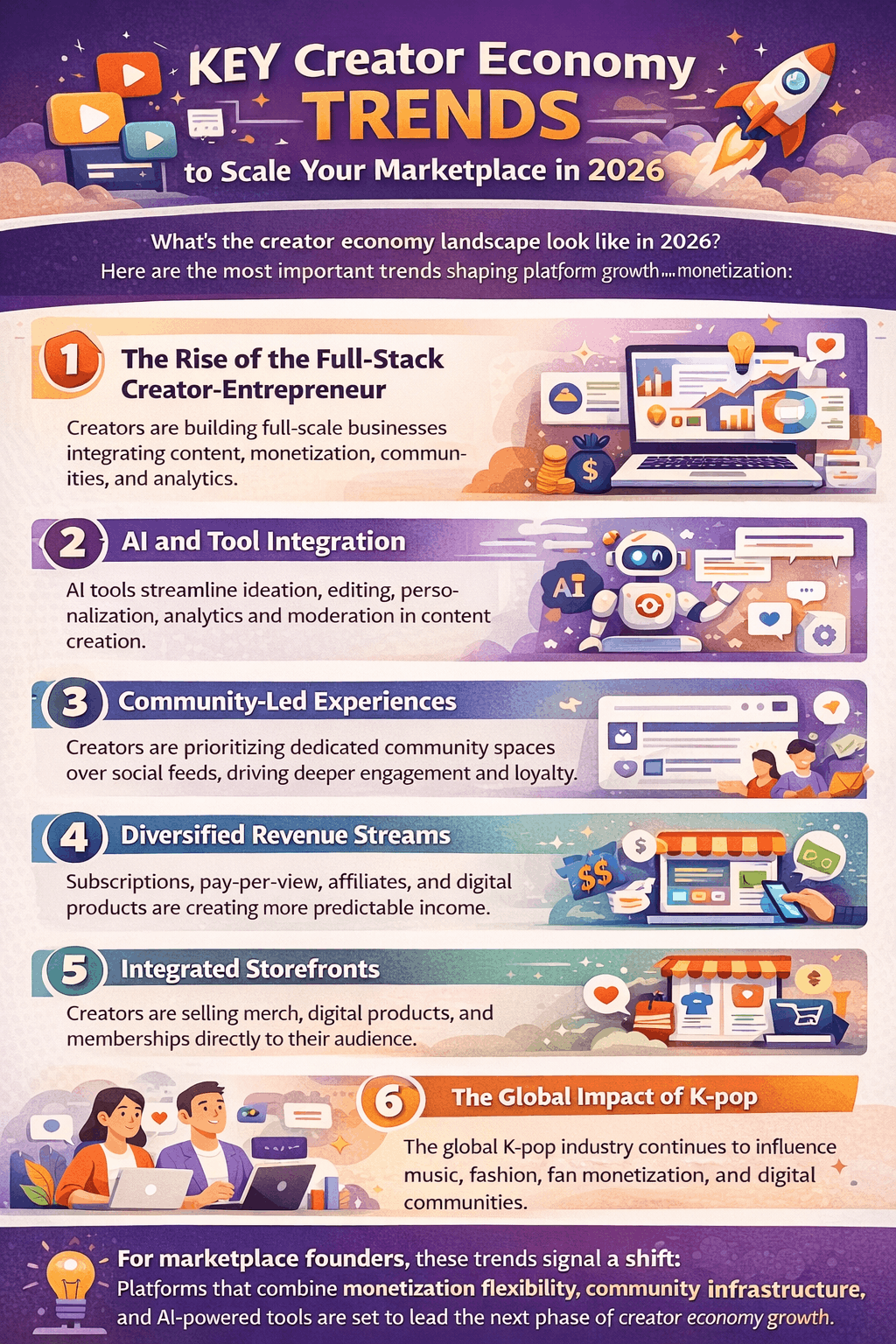
Let’s explore the key trends to chase like the north star!
- The Full Stack Creator-Entrepreneur Trends: Creators are building content infrastructure rather than single channels, scaling with content, sales, community, and analytics.
- AI and Tool Integration: AI adoption is widespread, and 87% creators use AI for content creation and planning, and 18% use AI agents for moderation.
- Community-Led Experiences: Creators prefer dedicated community spaces over pure social networks, driving niche community experiences.
- Diversified Revenue Streams: Subscriptions, pay-per-view, affiliates, digital products, bundles drive predictable income.
- StoreFronts: Allows creators to sell physical goods, digital products, or memberships directly to their audience.
- K- Pop Reigns: The global K-pop community is showing no sign of slowing down and expected to grow 17.44 USD Billion by 2035.
Successful Creator Marketplaces in 2026
Let’s explore the different creator marketplaces across diverse niches!
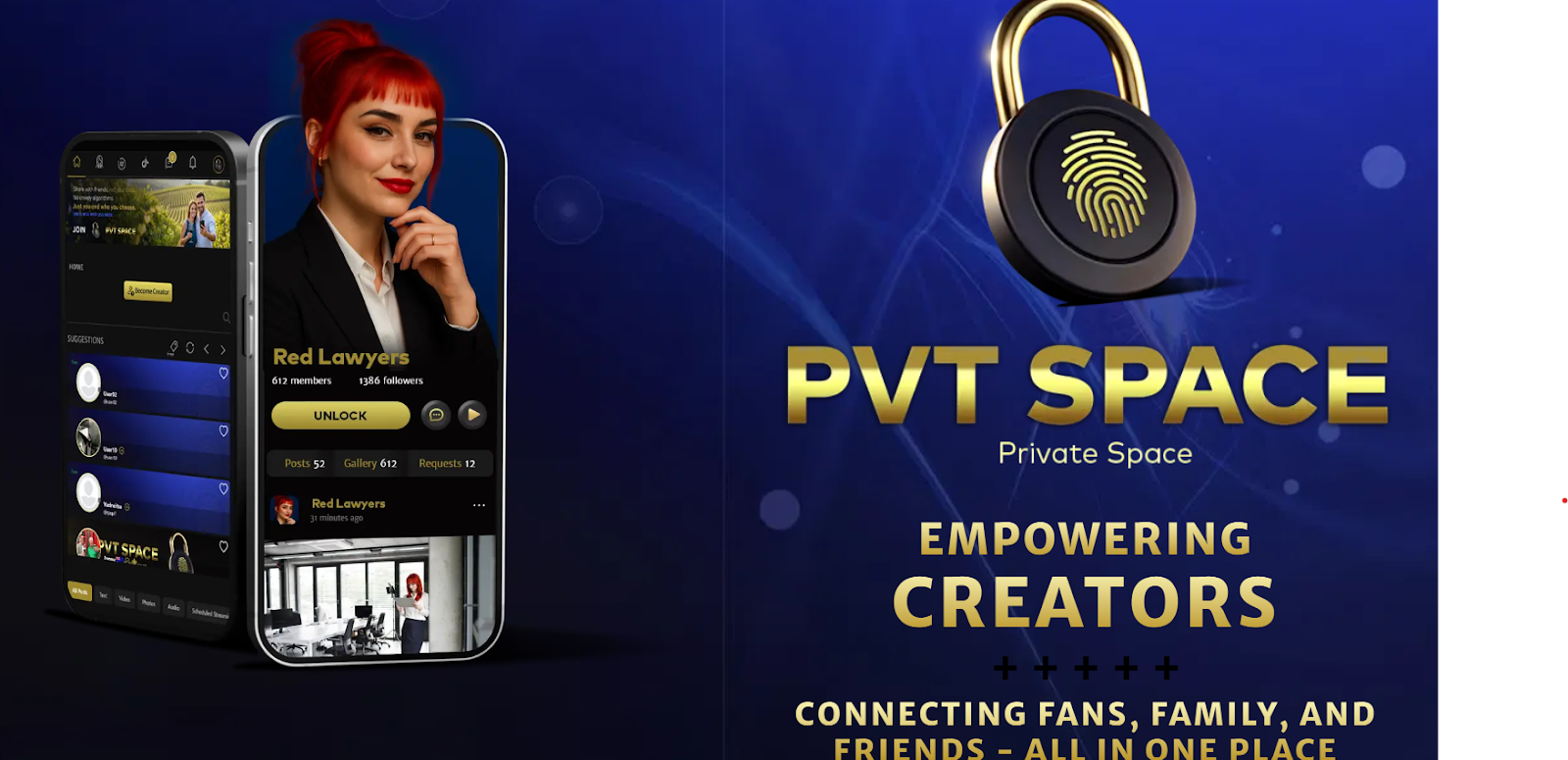
Pvt Space – (For creators, influencers, fitness coaches, and educators)
A premium subscription platform built by Fanso.io connecting influencers with their fans. Pvt space empowers creators with diverse revenue streams, such as subscriptions, PPV, tips, and private chats. The platform earns from a 85% – 15% commission split, where creators keep 85% of their earnings. It focuses on privacy and security and offers features like secure social connectivity, private messaging, voice/video calls, and group chats.
Fiesta Fans – (For adult creators)
Another marketplace built by Fanso.io, Fiesta Fans is a modern online community focused on adult creators. It is a UK-based subscription platform where fans can access premium content, livestreams, and merchandise stores. Seamless platform experience, security, scalability, and multiple revenue streams make Fiesta Fans a top choice for creators.
Conclusion: Ready to Launch Your Creator Marketplace?
The right marketplace empowers direct fan-creator or creator-brand connections, fosters authentic relationships and wins trust by rolling out creative content.
By leveraging innovation and cutting-edge technology, Fanso guides aspiring entrepreneurs to make their creator marketplace a successful milestone rather than a mere experiment! Contact our powerful squad to shape the next revolution in the creator economy today!
💡Related:
FAQ-Related to How to Build a Creator Marketplace
1. What are the different types of creator marketplaces?
Subscription-based marketplaces, community marketplaces, service-based marketplaces, pay-per-content, collaboration marketplaces, and live interaction marketplaces are the different types of creator marketplaces.
2. How to build your own creator marketplace?
Choose a niche and marketplace model, validate your business idea, pick a revenue model, determine the must-have features, decide the right development approach, consider security and compliance, launch and promote your marketplace.
3. How much does it cost to build a creator marketplace?
The cost of building a creator marketplace is between $50,000–$100,000+, depending on features and customizations.
4. What are the monetization models for the creator marketplace?
Subscriptions, platform commissions, pay-per-view, tips, donations and feature upsells are top revenue streams.
5. How to ensure legal compliance when building your creator marketplace?
Identity verification, PCI-compliant payment processors, content moderation, geo-blocking, anti-piracy and watermarking features ensure legal compliance for the creator marketplace.
6. Why is a unique business proposition essential for your creator marketplace?
A clear business proposition helps to stand out in the market, attracts the right audience, and helps build brand authority.
7. Can you build a creator marketplace without coding?
Yes, ready-made clone creator marketplace clone scripts offer core features and built-in monetization flows to launch your creator marketplace within 5-6 days.