
Key Takeaways:
- A subscription business generates predictable revenue and provides business stability.
- Popular subscription business ideas include creator community platforms, fitness & wellness, niche education, pet health & wellness, sustainable products, etc.
- The best subscription ideas combine recurring needs, emotional value, a USP, and scalability.
- Key Subscription Trends: Creator-powered growth, AI hyper-personalization, aggregators, sustainability, and embedded community.
Planning to build your own subscription business? Here’s our curated list of 10 subscription ideas — creator platforms, fitness subscriptions, niche education, SaaS tools, pet health & wellness, eco-friendly products, weekly meal kits, personal care, home maintenance memberships, data intelligence feeds— to get started!
Table of Contents
- 1 Why Start a Subscription Business in 2026?
- 2 10 Profitable Subscription Business Ideas in 2026
- 3 What Makes a Great Subscription Business Idea?
- 4 7 Steps to Start a Subscription Business
- 5 Key Subscription Trends in 2026
- 6 Launching Your Subscription Business is Just One Idea Away
- 7 FAQ-Related to 10 Profitable Subscription Business Ideas in 2026
Why Start a Subscription Business in 2026?
First off, you’re stepping into a $557.8 billion subscription market that is expected to grow at 13.3% CAGR by 2035. Subscriptions have one significant advantage: predictability with recurring revenue. The revenue is compounding compared to one-time sales.
Starting a subscription business is attractive due to:
-
Predictable Revenue
A steady cash flow from monthly and annual subscription plans brings greater business stability.
-
Consumer Comfort
The average US household pays for seven subscriptions monthly – groceries, entertainment, fitness, software, and more. So, consumers are familiar with subscription models, given the lower friction, higher conversions, and convenience.
-
AI and Automation
AI offers personalization, easy onboarding, recommendations, and smart pricing predictions.
-
Cloud Offers Affordable Tech Infrastructure
Cloud infrastructure offers scalability, predictable infrastructure costs, hardware optimization, global reach, fast iteration, and launch.
-
Easier to Layer Monetization
Integrating monetization layers like premium tiers, marketplaces, services, and add-ons on a subscription basis is easier.
10 Profitable Subscription Business Ideas in 2026
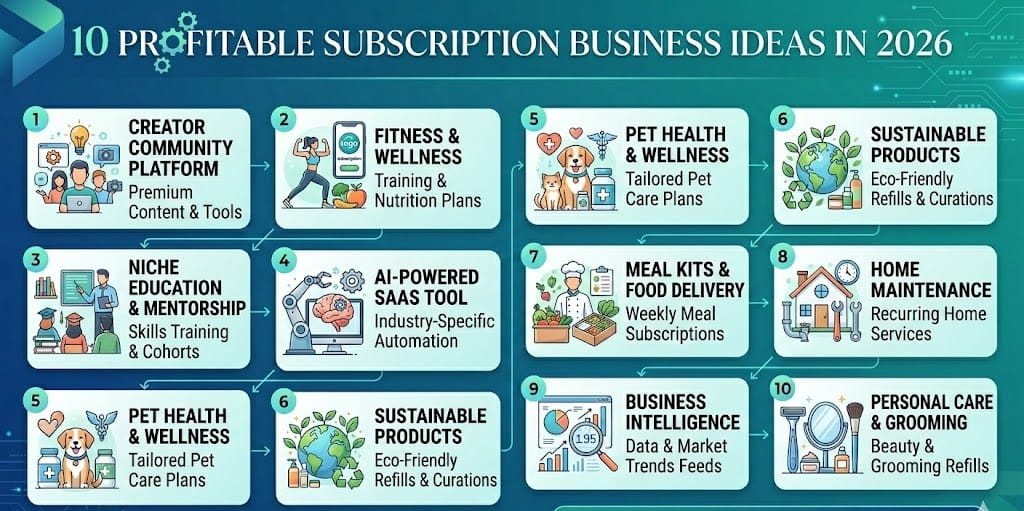
1. Creator Community Platform
The creator economy market size is $254.4 billion, driven by subscriptions, brand deals, and diverse monetization streams. Fitness coaches, educators, and niche influencers are top creator segments benefiting from community platforms.
Successful subscription-based content platforms offer premium content access, digital storefronts, livestreams, tips, paywalled content and donations. Focus on creator-centric content tools, high payouts, multiple revenue streams, AI integrations, privacy and security controls.
Model: Commissions, seller subscriptions (optional)
Why Is It Profitable?:
Massive creator economy market, faster creator monetization, predictable revenue, exclusive content access for users, and direct fan-creator interactions.
2. Fitness, Nutrition & Wellness Subscriptions
The high demand for personalized fitness and nutrition content makes subscription plans a solid business idea in this space.
You can niche down further and set up fitness training for specific segments like postpartum recovery, busy professionals, or senior citizens. Other ideas include corporate wellness, plant-based nutrition plans, athlete training, and health and nutrition subscription boxes.
To succeed in this space, your platform should fulfill customers’ fitness goals, provide lifestyle value, or habitual need. Partner with fitness influencers or nutritionists to expand your reach and build credibility.
Model: Subscription + premium live session bundles
Why Is It Profitable?:
Stronger emotional commitment, ever-growing market, tiered monetization, upsell opportunities, and higher lifetime value.
3. Niche Education & Mentorship Communities
Generic online course platforms are no longer captivating. Enter niche communities. They have close-knit relationships and reduced churn.
Think about establishing exclusive niche communities where you get mentorship from actual practitioners, skill experts, and peer learning.
Skillshare and Masterclass are great examples of niche community learning platforms. You can also choose a hyper-specific niche and launch a member cohort with live classes, resources, and community forums. Further, upsell with 1:1 coaching, exclusive event tickets, and mastermind sessions.
Model: Monthly membership + live cohorts + community
Why Is It Profitable?:
Niche focus, less competitive, premium pricing, community and peer feedback, exclusive mentorship, and practical experience.
4. AI-Powered SaaS Tool for Entrepreneurs and Businesses
AI is inspiring a new wave of business ideas in 2026. And the SaaS subscription space is no exception. With AI turning into a fierce competitive edge, businesses are leaving no stone unturned to enter the AI race!
The key here is to offer vertical-specific SaaS tools to automate their workflows and basic operations. For example, AI for real estate, AI for legal teams, and AI for logistics. These act as personal assistants working in the background, while businesses focus on scaling and growth. Identify a common pain point in your chosen niche and build your AI tool solving this problem.
Model: Freemium model, enterprise & team plans
Why is it Profitable?
Recurring revenue, high retention once workflows are built, savings hours of work, and high spending for AI integration.
5. Pet Health & Wellness Subscription Plans
Pet health is the newest, recession-resistant niche in the wellness industry! More and more pet owners are actively seeking products with functional and health-related claims. By building a subscription business around pet health and wellness, you are also building a lifestyle brand entering the $280 billion market.
Subscriptions can include nutrition plans, exercise routines, preventive care reminders, toys, accessories, grooming, and hygiene unique to pets. To maximize sales, gather information about subscribers’ pets, including age, breed, favorites, and allergies. Then, deliver tailored subscription boxes or content and seasonal offers.
Model: Tiered Subscriptions, Upsells (one-on-one consultation, supplements, personalized pet food, monthly check-ins)
Why Is it Profitable?:
High pet spending (Americans spend $157 billion annually), emotional spending, preventive and recurring care needs, and personalized wellness plans
6. Eco-friendly & Sustainable Product Subscriptions
Today, consumers are more eco-conscious and have a preference toward sustainable brands. From clean beauty and personal care to sustainable fashion and eco-friendly pet products, sustainable technology devices, there are tons of ideas to explore.
The key to building trust in this space is: personalization and transparency. Some popular sustainable brands like Earthlove, Alltrue, and Pure Earth Pets have proved the potential of sustainable products.
Model: Themed subscription boxes+ add-ons, tiered subscriptions, annual plans
Why Is It Profitable?:
Strong loyalty, premium pricing, consumers feel good after every purchase, brand credibility and easy expansion.
7. Food and Weekly Meal Kits
Whether it’s about getting your protein portions right or an easy dinner, food subscriptions are the biggest segment in the subscription market. With food delivery services covering all diets, cuisines, and regions, subscribers are spoilt for choice.
While food subscriptions assure success, it’s a bit tricky – fresh delivery, strong delivery systems, and quality checks need expertise. Blue Apron, Purple Carrot, and Everyplate offer affordable and healthy meals. The key is to position your service as a convenient, affordable and healthy lifestyle choice to succeed.
Model: Tiered subscriptions
Why is it Profitable?
Tip: New entrants can win with AI local and fresh sourcing, hyper-niche diets, sustainability, regional delicacies, and AI personalization.
8. Home Maintenance Memberships
The average home maintenance membership costs more than $8,800 annually. This includes preventive maintenance, unexpected repairs, emergency service, etc. Unpredictability is the biggest disadvantage of home maintenance. Allocating a fixed subscription cost (1% to 2% of the home’s value) yearly helps to deal with the rising costs.
Top home maintenance providers offer affordable monthly or annual plans, including maintenance visits, off-cycle in-person visits, and even remote work.
Model: Annual price tiers based on sq. ft. or unique tiers for plumbing, HVAC, electrical maintenance, and water heater service.
Why is it Profitable?
Recurring revenue, homeowners get peace of mind, bundled services, and scalability.
9. Data and Business Intelligence Feeds
Data is a goldmine for B2B marketers, advertising agencies, finance, and sales departments. Companies like Bombora, ZoomInfo, and Cognism are data pioneers and help B2B businesses with market trends, competitor intelligence, and industry analytics.
You can offer B2B data intelligence feeds covering competitors, regulatory changes, market trends and pricing to maximize business ROI. Target industry verticals like real estate, finance, retail and logistics where intent data unlocks long-term success.
Model: Tiered subscriptions or seat-based pricing
Why is it Profitable?
High-value data, enterprise contracts, and data helps companies across multiple departments and provide high ROI
10. Personal Care and Grooming
While beauty and personal care subscriptions have been there for a while, these subscription services still continue to thrive. Cost savings, variety, luxury blend and personalization are the key catalysts.
Subscriptions work well for replenishment subscriptions, curated beauty boxes, exclusive memberships, and professional treatment services. Focus on specific demographics (Gen-Z, men’s grooming or women’s skincare) or psychographics (quality-conscious, organic, sustainable packaging, premium luxury).
Model: Memberships , refill or auto-ship model
Why is it Profitable?
Omnichannel presence (online and in-store), personalization, sustainability, eco-conscious factor, perks and discounts
What Makes a Great Subscription Business Idea?
We have explored different subscription ideas until now. Not all ideas have the potential to be transformed into a profitable subscription business.
So, what makes for great subscription ideas?
-
Recurring Need
Your subscription business must solve a recurring need like monthly pet needs, upskilling, or daily meal kits. If your idea caters to a need that’s not recurring, one-time sales work better.
-
Unique Value Proposition
Can you promote your subscription business in a sentence? Like why customers need it now, weekly or monthly, then you got a clear marketing game plan.
-
Emotional Value
Sentiments like convenience, peace of mind, or habitual routine, drive loyalty and reduce churn.
-
Evergreen Idea
Instead of chasing trends, choose evergreen ideas to offer consistent, long-term value and generate predictable revenue. For example, fitness & wellness, niche education, membership communities, and pet health are some evergreen ideas.
-
Scalability
Ensure your business has low marginal costs for scalability and manageable operational costs for tools, technology, and service models.
7 Steps to Start a Subscription Business
Launching a subscription business needs strategic planning and execution. Here’s a practical roadmap on how to start a subscription business:
Step 1: Identify a niche and business idea
A profitable niche and viable business idea sets the foundation right! Choose a niche based on your passion, expertise and market demand. A hyper-niche lowers the competition and helps you to refine your marketing strategy.
Step 2: Perform market research
Once you decide on your niche, conduct thorough market research to understand the niche market and your potential customers. Analyze the top competitors in your niche, their strengths and weaknesses. Surveys, interviews, focus groups, or SEO tools (Semrush, Ahrefs) are quite helpful in this stage.
Step 3: Determine your business model and pricing strategy
A comprehensive business roadmap covers everything — vision, business model, market plan, and financial projections. Next, determine the right subscription model (flat rate, tiered, usage-based,or autofill), pricing, and billing frequency.
Step 4: Understand legal requirements
Decide whether you are setting up an LLC, corporation or sole proprietorship business structure. Each structure has different liability, business needs and tax implications. It is recommended to ensure compliance with industry standards and draft your privacy policy and terms of service.
Step 5: Develop your product or service
Finally, it’s time you design and build your products or services based on customer needs. If it is a physical subscription box, look into the delivery and supply logistics. For digital subscription services, set up technology and operations.
Step 6: Launch, iterate and improve your business
Make it official on all your strategic channels and launch your website. Monitor your platform performance and analytics in the first few days. Collect feedback from social media and early adopters. Optimize your platform and iterate on the process.
Step 7: Devise & execute a marketing plan
Launch marketing campaigns on social media, Google and offer attractive discounts. Build a solid presence on social media, subreddits and niche communities to generate buzz.
Key Subscription Trends in 2026
Launching a successful subscription business is all about timing, trends and adapting to the customer behaviors.
Top trends to orchestrate a powerful subscription experience include:
-
Creator-Powered Growth
Influencer-led promotions and creator partnerships win trust, rather than paid campaigns.
-
Bundles and Content Aggregators
Platforms are shifting towards packaging multiple services inside a single subscription with a single billing. For example, Telco content bundles including mobile plan + OTT streaming + music bundled in one subscription, offering convenience.
-
AI-Driven Hyper-Personalization
Generic subscriptions are dead. Customers prefer personalized content and pricing. AI helps to scale content with custom recommendations, content feeds, tailored learning paths and smart pricing.
-
Community as Product
Subscription business is no longer just niche content or products. More and more businesses are including peer learning, Discord communities, live cohorts and niche events within subscriptions.
-
Sustainability Builds Trust
Whether it’s sustainable packaging or organic ingredients, sustainability lowers churn, builds authority, and of course, protects our environment. And this is the key differentiator for many subscription businesses already.
Launching Your Subscription Business is Just One Idea Away
Many subscription businesses fail not because the idea isn’t exciting enough, but because the execution is flawed. Managing payments, billing, compliance, technology and scaling is challenging and slows down your business.
Fanso.io removes that friction with subscription management, payment integration, advanced AI enhancements, centralized dashboard & analytics and built-in content moderation.
Book a demo and see how Fanso.io helps turn ideas into powerful subscription empires!
💡Need more insights on how to transform your ideas into successful business? Read our comprehensive how-to- guides:
FAQ-Related to 10 Profitable Subscription Business Ideas in 2026
1. What is a subscription business?
A subscription business provides premium content or services for a recurring subscription fee (weekly, monthly, or annually). The key is to deliver ongoing value to consumers and reduce churn.
2. What are the most successful subscription services?
Fitness and wellness subscriptions, creator community platforms, pet health & wellness, niche education, eco-friendly products, food and weekly meal kits are top subscription segments.
3. Are subscription businesses still profitable in 2026?
Yes, subscription businesses are still profitable, driven by AI and automation, consumer comfort with subscriptions, recurring revenue, and cloud hosting services.
4. What is the cost of building a subscription business?
Starting a subscription business costs between $1500 – $150,000 for hybrid subscriptions.
5. How do subscription businesses reduce churn?
Ongoing value, personalization, flexible plans, frictionless onboarding and community features reduce churn.
6. How does AI make subscription businesses more profitable?
AI helps subscription businesses with personalized recommendations, churn prediction, pricing optimization, and automating customer support.
7. What are the biggest challenges in running subscription businesses?
Reducing churn, consistent value delivery, niche differentiation, and brainstorming ideas for content-based platforms.