AI companion apps are no longer a niche curiosity but a real, revenue-generating business model. What started as simple chatbots has evolved into something that people can converse with, feed their preferences, and establish relationships on the go.
This revolutionary shift is why platforms like OurDream have gained a lot of traction. In fact, the global AI companion market size is anticipated to reach USD 140,754.2 million by 2030, growing at a CAGR of 30.8% from 2025 to 2030.
The niche runs basically on a simple idea. The increasingly busy hustle culture has made people want interactions that feel personal, responsive, and available. From a business point of view, that demand translates into strong user engagement and recurring revenue.
More importantly, this isn’t a niche that has to be tried and tested. The monetization model is already proven with subscriptions, credits, or premium features, and more, making the category attractive for entrepreneurs. In this guide, we’ll walk through the practical steps on how to build OurDream AI clone app.
Understanding OurDream AI App
Let’s start by understanding what OurDream is. Having positioned themselves as the “ultimate adult playground,” OurDream app is a digital platform where users interact with an AI-powered companion that acts and behaves like a real personality. Unlike a generic chatbot that’s not personalized, OurDream’s AI companions can hold conversations, remember past interactions, adapt to user preferences, and respond in a way that feels highly personalized over time.
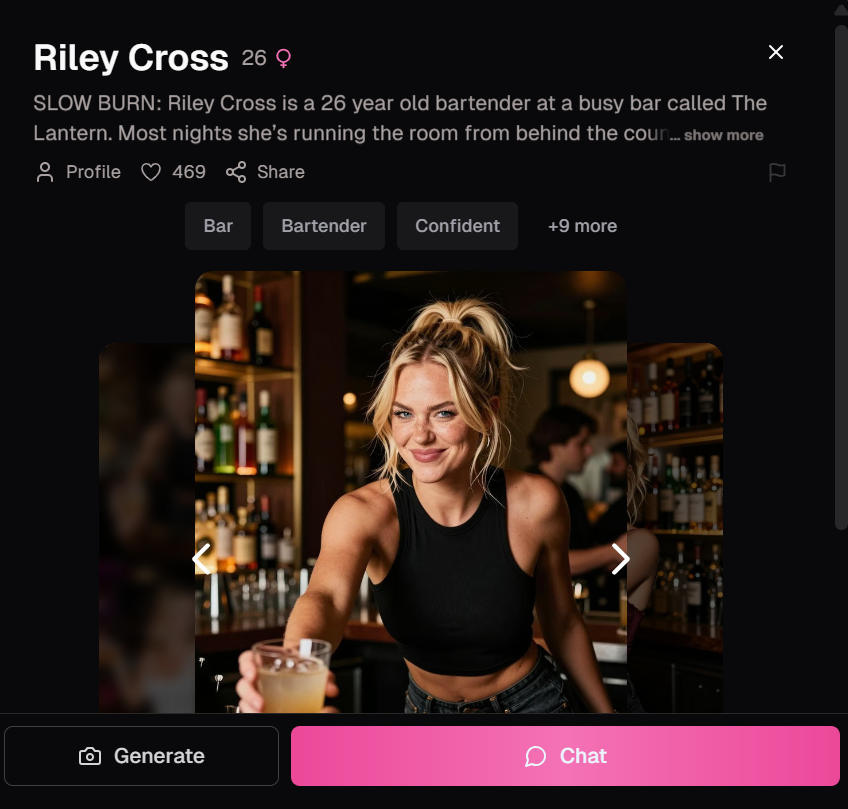
This makes users think they are talking to a real person (more like a girlfriend, or simply to fulfill their desires), making them create a bond, wanting them to come back for more.
Here’s how a typical user journey would look in OurDream AI companion app. A user would enter the platform, browse through the various AI models (or even create a customized one), choose one they prefer, and start chatting. Users can generate media and play out different roleplay scenarios in the same session.
As for monetization, the platform operates on a credit-based and subscription model, allowing users to engage continuously while the platform continues to generate revenue. That’s typically how OurDream AI companion app works.
How to Build an OurDream AI Clone App?
While it might seem difficult to create OurDream AI clone app, in reality, it is quite easy and follows an easy path. Before we start, remember that trying to do too much at once only sabotages the progress and results in a loss of time and money. Instead, try to build a platform that’s ready to hit the market, bring in some traction, and then scale as you make money.
In this section, we’ll break down the process of how to build OurDream AI clone app step by step, with each step focusing on one important thing at a time.
Step 1: Define Your AI Companion Concept
The first step of developing OurDream AI companion app is deciding what kind of AI companion you are actually building, and who you are building it for.
Start by asking the question, what type of interaction will people want from an AI companion. The answers will be entertainment or roleplay, emotional support, companionship, and more. In the majority of cases, a niche audience is often easier to serve because their expectations are clearer.
Your niche determines the companion type, which in turn shapes its personality, tone, and interaction style. While choosing the niche, add in the customization factor as well. Allowing users to be able to customize the characters will bring more engagement, but it also increases development complexity, requiring more advanced AI logic, memory handling, and UI flexibility.
To mitigate this, offer limited customization options during the early stages. You can use predefined personality/appearance templates to start with. This will give users a sense of control and personalization, giving you the time to increase customization options as the platform gains traction slowly.
Choosing the direction is very important at this stage, as it eliminates any unnecessary back and forth and development costs.
Step 2: Identify the Must-Have Features
Once the niche is finalized, the next step to develop OurDream AI companion app is deciding on what features your clone app needs to have.
As mentioned earlier, instead of starting with too many features at once, start with what is truly essential to make your clone app functional on day one. Here is a quick list of the must-have features of your OurDream AI clone app.
AI Chat Engine: This is the core of your OurDream clone platform. Users should be able to interact with the bots and receive responses that feel relevant and personalized. This can be achieved by connecting with LLM models. Keep in mind that not all LLM models support adult/companionship platforms.
The platform should also integrate image generation tools such as Stable Diffusion, DALL·E, or Midjourney APIs to enable users to create character visuals, profile images, and more context-based content directly within the app.
Character Customization: The engagement rates on companionship websites are usually higher when users have some control over the personality they interact with. Even small personalization options like name, appearance, and personality type can make a big difference.
Memory: The ability to remember conversations and reply accordingly is what differentiates an AI companion from a basic chatbot. Check the LLM model you are integrating to understand its memory capability. For example, platforms commonly use models like GPT-4 or Llama together with vector databases such as Pinecone, Weaviate, or Chroma to store conversation history and enable long-term memory.
Multi-media Support: The option to exchange/generate images and voice messages can make the experience feel more personalized and drive engagement higher.
Account & Subscription: The platform should include features like signup and login, user profiles, payment integrations, and more.
Short-Form Content (Reels/Feed): A reel-type feed, where users can post short videos and images, can help promote higher levels of engagement and time spent on the platform. These types of feeds are often used to highlight personalities and interactions that are currently trending.
Community & Social Interactivity: Community functions like comments, likes, followers, and community groups allow users to interact not just with the AI companions but also with each other for a richer and more social environment.
Explore & Smart Discovery: Having an explore section enables users to discover other companions and content according to certain filters, including age, gender, interests, popularity, and activity levels.
These features prove essential to the efficient functioning of the website. You can develop the remaining features in the later phases.
Step 3: Choose How You Will Build OurDream AI Clone App
Once the niche and the platform features are decided, the next big step is deciding how you are going to develop OurDream AI companion app. The decision directly influences timelines, budgets, and long-term growth.
The first option is building the app from scratch. This usually means hiring developers, designing the system architecture, integrating AI models, and maintaining servers yourself. While it gives full control over the website, it comes with longer development timelines and costs.
Then there’s the second option, where you start with a ready-made platform and customize it to fit your needs. This method is more feasible as you don’t have to build the platform and its features from scratch. This saves a chunk of the development time and costs involved, as most of the infrastructure is already in place. All that’s left is for you to integrate AI models, set up payments, manage hosting, and focus on growth.
This is where platforms like Fanso.io come into the picture. Fanso is an all-in-one creator marketplace software that lets you build platforms like OnlyFans, Candy AI, OurDream, Fansly, Patreon, and more.
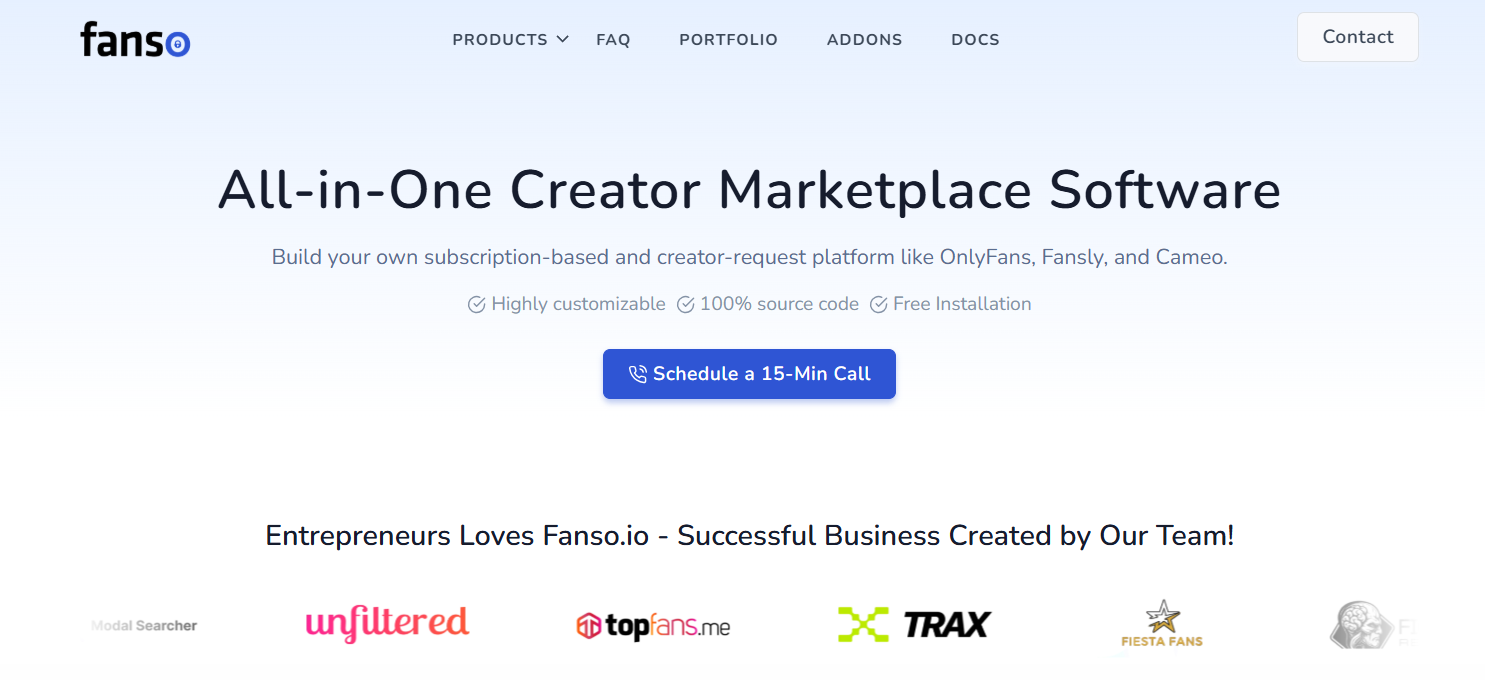
The platform comes with ready-made features like built-in AI companions, AI image generation, subscription & wallet, and more.
This approach works best where the infrastructure is already tested, eliminating the need to spend three to six months building the platform from scratch.
Step 4: Develop the Core AI System
Now that the core of your platform is figured out, it’s time to fine-tune the AI experiences.
The best place to start is by focusing on how your AI companions speak, act, and behave over time. By setting the tone as playful, calm, professional, and romantic, you can achieve different types of AI companions on your website.
The next step is to set rules on how the AI should interact with users. How should the responses be, how it answers different types of questions, and how consistent it is throughout.
Check the AI platform multiple times to ensure quality and adjust prompts and settings wherever necessary. Another important consideration is moderation and safety. AI systems interact directly with users, so you need clear boundaries for acceptable behavior and content. Ensuring the AI model is reliable in the initial phase is more important than trying to perfect it.
Step 5: Build the App Interface (Web or Mobile)
The interface is what the users see and interact with daily. But the first decision is whether to launch as a web app or a mobile app. The ideal option would be to start with a web version because it is easier and faster to build, and the best part is that even mobile devices can access it without needing approvals from the app store.
While building the interface, make sure the usability factor is kept in mind. The interface should be simple, clear, and responsive from the moment a user enters. The goal is that companion apps revolve around a chat-style interface. Users should be able to start a conversation within seconds, navigate settings easily, and switch between features without friction.
Beyond this, the interface needs to safely connect with the AI models. The app should be designed with scalability in mind. When the interface feels smooth and intuitive, users focus on the experience instead of the mechanics, and that’s exactly what you want to achieve in this step.
Step 6: Add Monetization and Payment Systems
Your platform needs a robust monetization strategy to generate revenue consistently. Most companionship platforms make money via the subscription model. Users pay a monthly or yearly fee to access the AI interactions and premium features. This approach provides predictable, recurring revenue.
Along with this, you can introduce a token system for very specific (premium) features like unlocking certain models, generating high-quality images, etc. The goal is to complement the subscription, not replace it, by offering optional, high-value upgrades. In the early stages, it’s important to keep pricing competitive to attract and retain users while you validate your product.
Also, not all payment providers support adult niche websites. Look for payment providers like CCBill, verotel which are known to be experts in the field.
How Much Does It Cost to Develop an OurDream AI App?
The cost of developing OurDream AI app can vary widely depending on how you choose to build it, the features you include, and the scale you plan to launch with. Understanding the costs upfront will help you plan accordingly.
Scenario 1: Building an OurDream AI Clone from Scratch
This approach requires extensive resources as you need to hire developers and designers to build the platform from scratch. As mentioned earlier, you get full control over your website, but the launch timeline is at least a couple of months.
Cost elements in this scenario usually include platform development from scratch, AI model integration, testing, and hosting setup charges.
The estimated development cost is around $50,000 – $100,000+ and is an ideal fit for businesses that want complete control from day one.
Scenario 2: Launching an OurDream AI Clone Using a
Ready-Made Platform
This approach is preferred mostly by startups and solopreneurs today. Instead of building it from scratch, the clone script comes with pre-built features, reducing the resources and development time.
In this case, the focus will be shifted towards customizing the platform for design & branding, and integrating AI models instead of developing the platform from scratch.
The estimated cost is around $9,000 – $15,000. This approach also reduces any technical risks involved in the previous method.
The Ongoing Costs After Launch
Irrespective of any development method, the following costs are directly tied to how actively users engage with the app.
| Cost Element | Description | Monthly Cost |
| AI Usage | GPU compute and AI model inference for generating real-time chat responses and images during user interactions | $300 – $5,000 |
| Hosting & Servers | Chat history, user data, and media files | $100 – $1,500 |
| Maintenance | Bugs, feature updates, and monitoring performance | $200 – $2,000 |
| Payment processing | Charges when users purchase subscriptions or tokens | 2% – 5% per transaction |
| Domain & SSL Certificate | Domain registration and SSL certificate for securing web and API traffic | $10 – $50 |
That’s a quick overview of how much it costs to develop the OurDream AI app. While these are the basic cost estimates, they might slightly go beyond or even below, based on your choices and preferences.
Common Mistakes to Avoid While Developing OurDream AI Companion App
Creating an OurDream AI clone app is not always about getting the technology right. There are many things beyond it. Many founders who wanted to build a companionship app failed not because the idea was weak, but because the execution was not seamless. Here are a few common mistakes to avoid while developing OurDream AI companion app.
1. Too many features at once
While it’ll be tempting to launch too many features (voice, video, high customization) all at once, this could rapidly increase the development timeline and costs. Starting an MVP with reliable features usually performs better and is the wise choice.
2. Underestimating ongoing operational costs
There are other costs beyond development, like AI usage, hosting, and maintenance. Factor in all these costs before you start creating an OurDream AI companion to avoid any financial pressure during launch.
3. Ignoring user experience for technology
Great technology doesn’t guarantee user satisfaction. Make sure not to overload the website with heavy tech and compromise user experience, simplicity, and responsiveness.
4. Overlooking moderation and safety controls
Since companionship apps involve interactions with AI, setting boundaries and guardrails is essential. Fine-tune the AI, run multiple iterations to ensure it functions well within the guardrails.
5. Broadening the target niche
While a broad set of audiences looks opportunistic, the platform becomes diluted. You can slowly introduce multiple niches once your platform starts to scale. A specific niche app experience feels more personalized and intentional.
Starting slow with a stable foundation, and ensuring steady growth down the line without committing common mistakes increases the chances of building a successful and scalable OurDream AI companion platform. Over time, this approach helps you improve user retention, expand features confidently, and turn your platform into a profitable long-term business.
6. Choosing the wrong LLM model
Not all LLM providers support companionship or adult-oriented platforms. Some widely used models enforce strict content policies that restrict explicit conversations, roleplay scenarios, or personalized interactions, and choosing the wrong model can disrupt platform services even before you launch. Explore Llama-based models, Mistral, or other customizable open-source LLMs. Also, ensure to deploy with proper moderation and compliance controls.
Conclusion: Launch Your OurDream AI Clone App the Smart Way
Creating an OurDream AI clone app might seem difficult at first. But once you understand the process, it becomes much simpler. Having a clear idea of your niche and how your platform will deliver value already puts you halfway to success.
Another key factor you have to keep in mind is the method you choose to develop the platform. Platform providers like Fanso.io simplify the overall development process of OurDream clone AI app with their ready-made marketplace scripts, saving you thousands of dollars in investment.
In the end, the successful platforms are the ones that have focused, practical, clear-thinking teams behind them.
Frequently Asked Questions
1. How much does it cost to build an OurDream AI clone app?
The cost to build an OurDream AI clone app depends on the development method, features, and the level of customization. Typically, an OurDream AI clone app costs $9,000 to $15,000 when built using white-label scripts and more than $50,000 when built from scratch.
2. How long does it take to develop an OurDream AI clone app?
The development timeline can vary between 3 and 12 weeks, depending on the complexity of the platform. Starting with a functional platform with basic features and expanding on features slowly is the ideal approach for solopreneurs and startups.
3. What features are essential in an OurDream AI companion app?
The must-have features of an OurDream AI clone app are multiple virtual companions, character customization, chat interface, multimedia generation support, and payment gateway integrations. Having these features during the launch can increase user retention and the success of the platform.
4. Is building an OurDream AI clone app a profitable business?
Yes. The AI companion market size is anticipated to reach USD 140,754.2 million by 2030, growing at a CAGR of 30.8% from 2025 to 2030. Because of this, most businesses are trying to build virtual companion platforms. When strategized correctly, this recurring revenue business can attract long-term growth.